
Traditional Braces
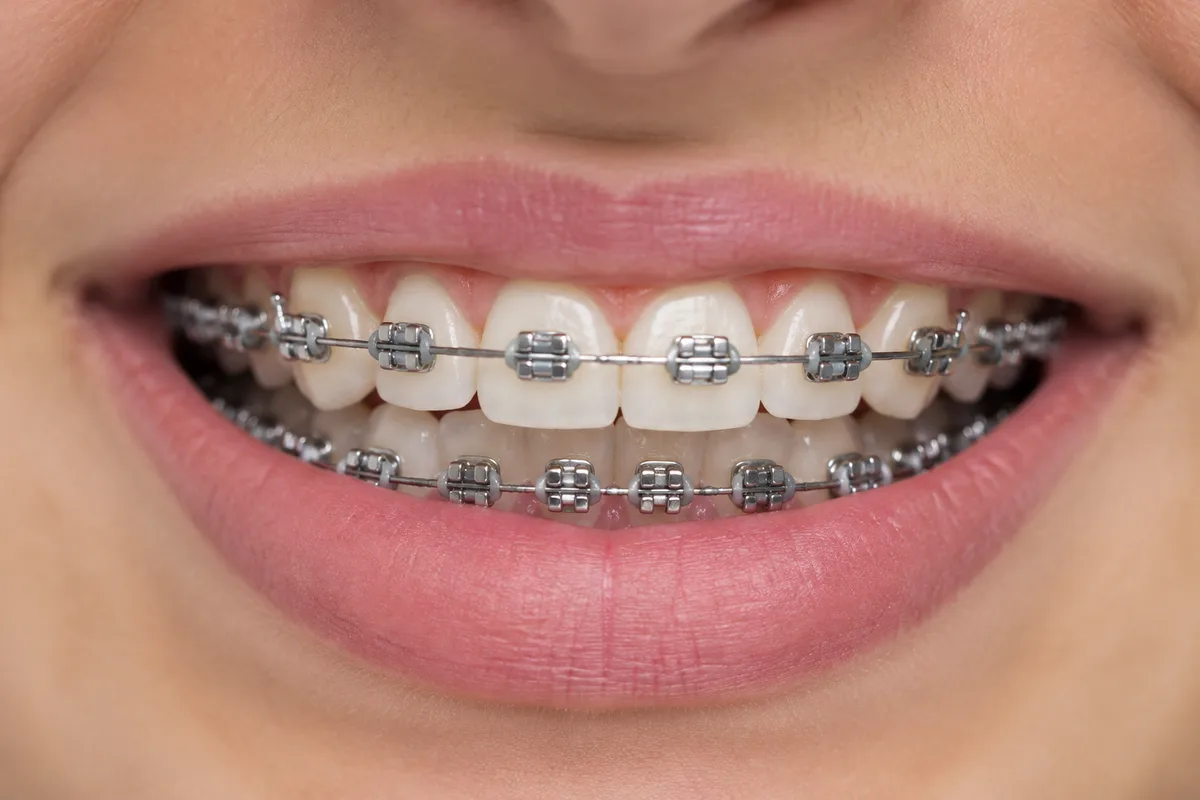
Traditional Braces
Traditional braces use metal brackets bonded to the teeth and a connecting archwire to move teeth gradually and predictably. They remain one of the most versatile ways to correct crowding, spacing, rotations, and bite problems, and they work well for cases that need precise, three-dimensional control. Because they are fixed in place, they keep working without depending on how many hours a day an appliance is worn.
What braces can address
- Crowding and spacing — aligning teeth that overlap, sit rotated, or have gaps between them.
- Bite relationships — improving how the upper and lower teeth meet in overbite, underbite, crossbite, and open bite patterns.
- Complex tooth movement — uprighting tipped teeth or guiding teeth that have not erupted into place.
- Coordination with other appliances — braces are often paired with expansion or functional appliances as part of a broader plan.
Our approach at Synera Dental Wellness
Dr. Jeremy Montrose, D.M.D., approaches orthodontics with attention to the airway, the temporomandibular joints, and facial development, not tooth position alone. Treatment planning may include a CBCT evaluation and an assessment of breathing and jaw function so that the final bite supports comfortable, healthy function. Braces are offered for both children and adults, and other options, including clear braces, white braces, custom 3D printed braces, and clear aligners, are discussed when they suit your goals.
This content is for general information only and isn't dental or medical advice. Talk with your dentist or orthodontist about your own situation. If you have a medical emergency, call 911.