
Lip-Tie Release
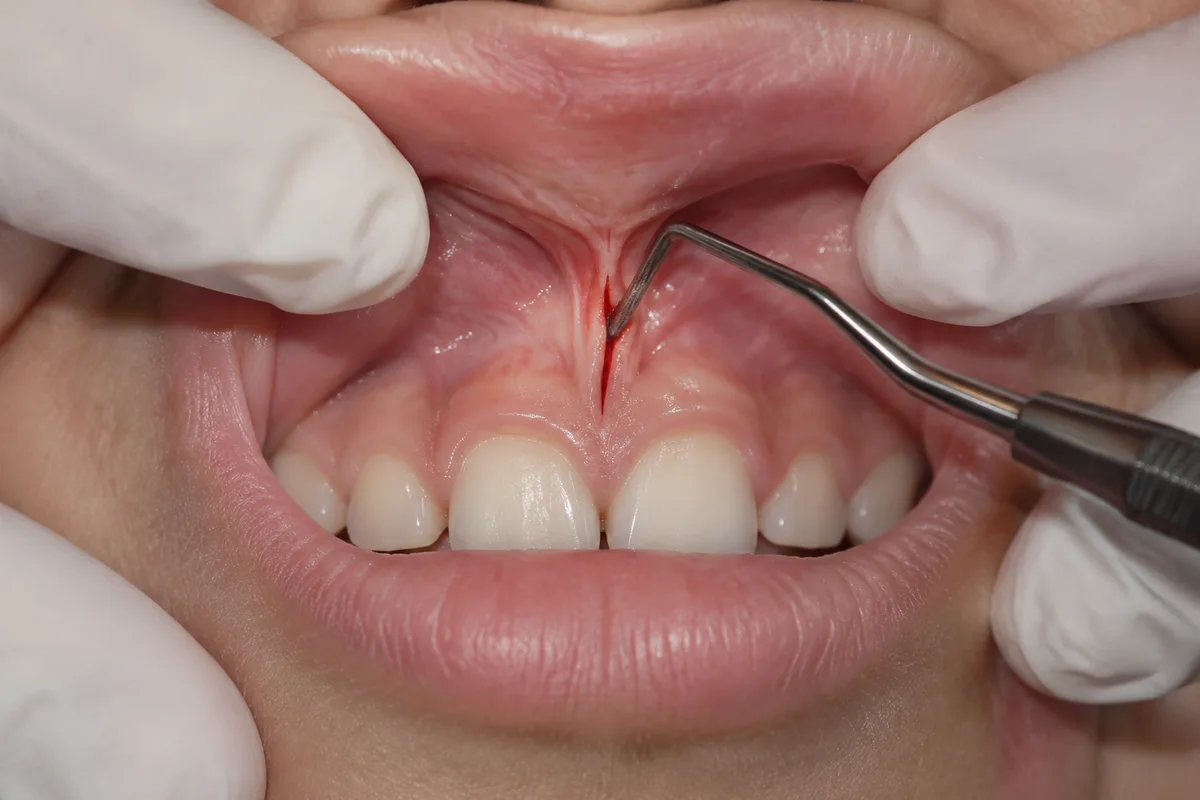
Lip-Tie Release
A lip-tie occurs when the strip of tissue connecting the upper lip to the gums restricts movement of the lip. In infants, this can affect latch and feeding; in older children and adults, it may contribute to gaps between the front teeth, gum recession, or difficulty with oral hygiene around the upper lip and gumline.
When Lip-Tie Release Is Considered
- Feeding difficulty — an infant struggling to latch or maintain a seal while nursing or bottle-feeding.
- Dental spacing or gum concerns — a persistent gap between the upper front teeth or recession linked to lip pull.
- Oral hygiene challenges — restricted lip mobility that makes it harder to clean the front teeth and gumline.
Our Approach
Dr. Jeremy Montrose evaluates lip-tie as part of a broader look at oral function, drawing on training in functional frenuloplasty and comprehensive frenulum inspection and surgery for patients from infancy through adulthood. Rather than viewing the lip-tie in isolation, he considers how it relates to feeding, tongue function, and jaw development.
What to Expect
- Evaluation — an assessment of lip mobility, related tongue-tie, and how the tie may be affecting feeding, speech, or dental development.
- Release procedure — a precise release of the restrictive tissue, tailored to the patient's age and needs.
- Follow-up guidance — direction on aftercare and, when appropriate, coordination with myofunctional therapy to support healthy oral function.
This content is for general information only and isn't dental or medical advice. Talk with your dentist or orthodontist about your own situation. If you have a medical emergency, call 911.